Shrines vs. Temples: The Ultimate Guide to Japan’s Spiritual Wonders
Shrines vs. Temples: The Ultimate Guide to Japan’s Spiritual Wonders
When you walk through the streets of Japan, you’ll inevitably encounter beautiful, ancient structures with sweeping roofs and serene atmospheres. Some are guarded by stone lions, others by fierce wooden warriors. For many travelers, they all look like “temples.” However, in Japan, there is a clear distinction between a Shrine (Jinja) and a Temple (Odera).
Knowing the difference—and the correct way to pray at each—will not only save you from an awkward “etiquette faux pas” but will also deepen your connection to Japan’s rich cultural heritage.
1. The Core Difference: Shinto vs. Buddhism
To understand the structures, you first need to understand the two main religions of Japan that coexist in harmony.
- Shrines (Jinja): These belong to Shinto, Japan’s indigenous religion. Shinto is based on the belief that spirits or deities, called Kami, inhabit all things in nature—mountains, trees, rivers, and even specific people. Shrines are considered the “homes” of these deities.
- Temples (Odera): These belong to Buddhism, which came to Japan from India via China and Korea. Temples are places of worship for various Buddhas and Bodhisattvas. They often serve as monasteries for monks and may also house cemeteries.
2. Visual Cues: How to Tell Them Apart in 3 Seconds
Before you even step inside, there are clear visual signs to help you identify which is which.
The Gates
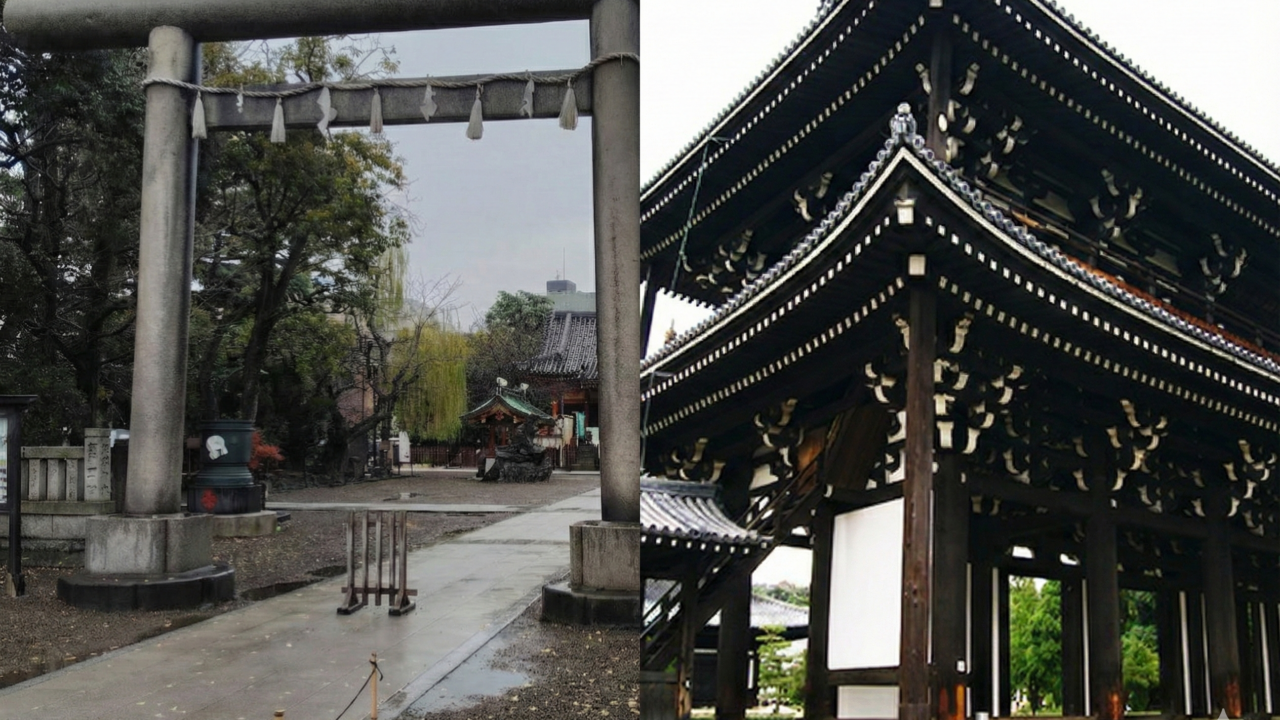
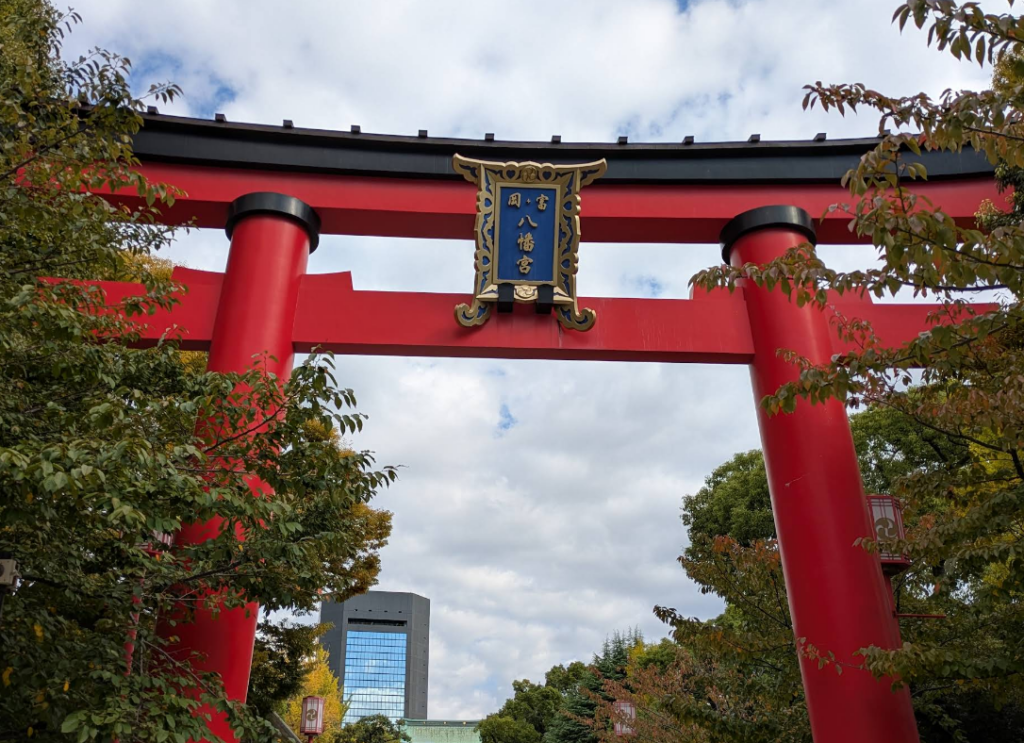
- Shrines: Look for a Torii gate. This is a simple, often bright orange (vermilion) or stone structure consisting of two upright posts and two horizontal rails. It marks the boundary between the human world and the sacred world.
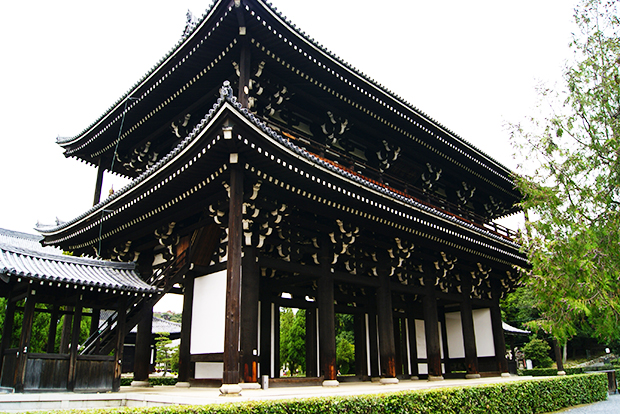
- Temples: Look for a Sanmon gate. This is a large, elaborate, roofed gate that looks more like a building. You will often see two fierce-looking wooden guardians (Nio) standing inside the gate to protect the temple.
The Guardians
- Shrines: You will usually see a pair of stone lions or dogs called Komainu. At Inari Shrines (dedicated to the rice god), you will see Foxes (Kitsune) holding keys or scrolls.
- Temples: You are more likely to see Buddha statues, incense burners, and perhaps a pagoda (a multi-tiered tower).

The Names
- Shrines: Names often end in -jingu (e.g., Meiji Jingu) or -jinja (e.g., Fushimi Inari Taisha).
- Temples: Names often end in -ji (e.g., Senso-ji) or -dera (e.g., Kiyomizu-dera).
3. The Shared Ritual: Purification (Temizu)
Whether you are at a shrine or a temple, the first thing you should do after entering is to purify yourself at the water pavilion, known as the Temizuya.
- Pick up the ladle with your right hand and pour water over your left hand.
- Switch the ladle to your left hand and wash your right hand.
- Switch back to your right hand, pour some water into your left palm, and rinse your mouth (never touch the ladle directly to your mouth).
- Rinse your left hand once more.
- Finally, hold the ladle vertically so the remaining water runs down the handle to clean it, then place it back face-down.
4. How to Pray at a Shrine: The “2-2-1” Rule
Shrine rituals are active and intended to get the attention of the Kami.
- The Approach: Gently toss a coin into the offering box (5-yen coins are considered lucky!). If there is a bell, ring it once or twice.
- Bow Twice: Deeply, at a 90-degree angle.
- Clap Twice: Bring your hands to chest level, and clap twice. The sound is meant to greet the deity.
- Pray: Keep your hands together and say your silent prayer or thanks.
- Final Bow: Bow deeply one last time to show your respect.
5. How to Pray at a Temple: The Silent Prayer
Buddhism is about inner peace and mindfulness. Therefore, the ritual is much quieter.
- The Incense (Optional): Many temples have a large incense burner. If you buy incense, light it, fan the flame out with your hand (don’t blow on it!), and place it in the sand. Waft some of the smoke toward yourself—it is believed to have healing powers.
- The Offering: Toss a coin into the box.
- The Bow: Gently bow your head once.
- The Prayer (Gassho): Place your palms together in front of your chest. DO NOT CLAP. Pray silently in your mind.
- Final Bow: Bow once more before leaving.
6. Pro-Tips for a Respectful Visit
- Walk on the Sides: At shrines, the middle of the path is for the gods. Stay to the left or right.
- Photos: Most outdoor areas are fine, but never take photos inside the main hall where the altar is located unless there is a clear sign saying it’s okay.
- Goshuin (Stamps): If you visit many places, buy a “Goshuin-cho” (stamp book). For a small fee (usually 300-500 yen), a monk or shrine maiden will hand-write a beautiful calligraphy stamp for you. It’s the ultimate souvenir!
Summary: A Quick Cheat Sheet
- Shrines = Torii Gate + Clapping 👏
- Temples = Roofed Gate + Silence 🤫
By following these simple steps, you are showing immense respect for Japanese culture. Enjoy the spiritual peace and the stunning architecture of these sacred sites!