Imperial Palace Outer Garden: 5 Highlights of Tokyo’s Historical Heart
Imperial Palace Outer Garden: 5 Highlights of Tokyo’s Historical Heart
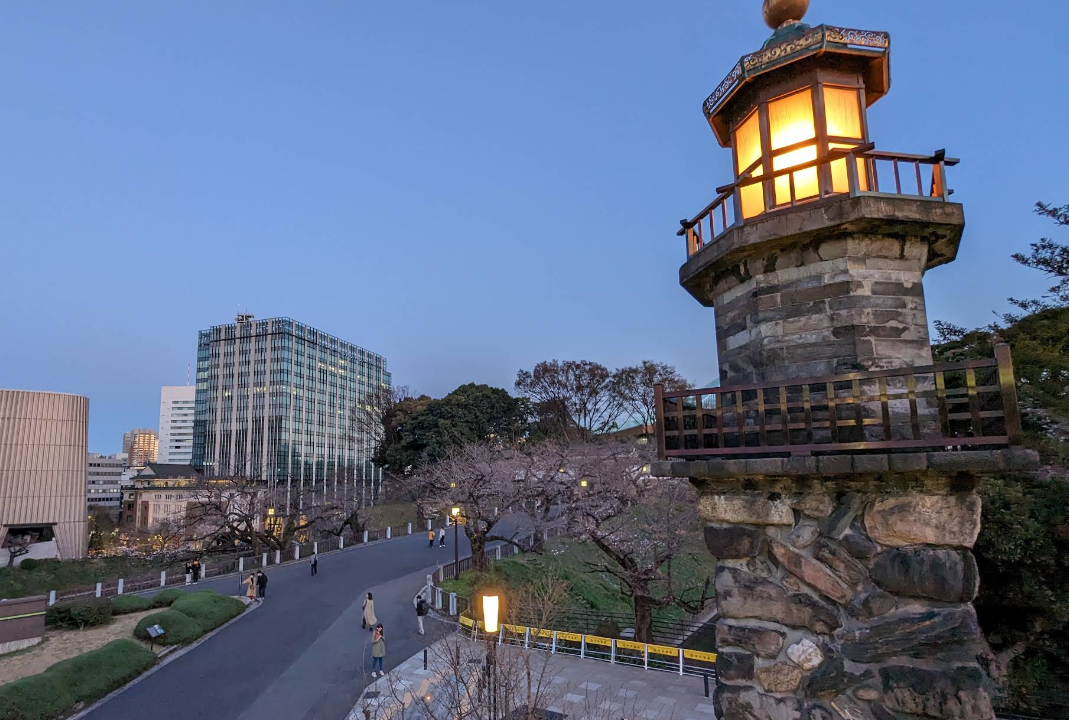
The Imperial Palace Outer Garden (Kokyo Gaien) is a vast, open sanctuary in the center of Tokyo. Unlike the busy streets of Shibuya or Shinjuku, this area offers deep historical resonance, stunning architecture, and a peaceful atmosphere. Here are five essential spots to explore the legacy of the Samurai and the beauty of the Japanese Empire.
GoogleMAP:Imperial Palace Outer Garden (Kokyo Gaien)
1. The Vast Plaza: A Forest of Black Pines
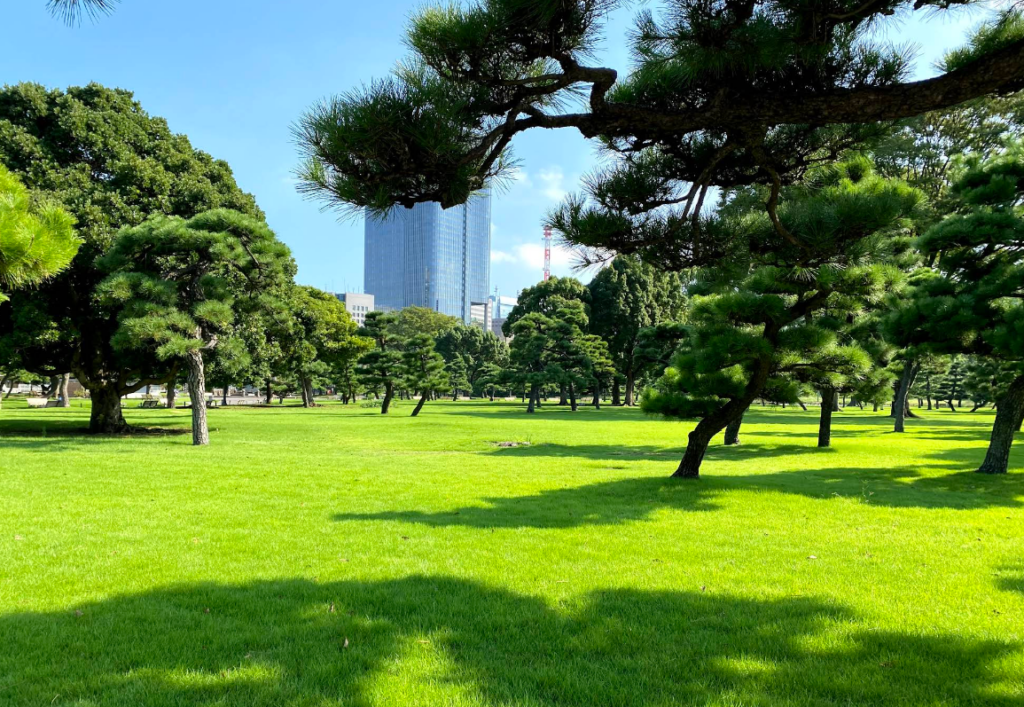
The Ultimate Contrast of History and Modernity
Stepping into the Outer Garden, you are immediately greeted by an overwhelming sense of space. Spread across 130,000 square meters, this manicured plaza is home to approximately 2,000 meticulously shaped Black Pine trees.
- The Highlight: Stand in the center of the plaza to see a 360-degree view where ancient stone moats and castle walls sit in the foreground of Marunouchi’s futuristic skyscrapers. It is the quintessential “Old vs. New Tokyo” photo spot.
- The Hack: The plaza is open 24 hours a day and is completely free to enter. It’s a great place for a morning walk before the city wakes up.
2. Seimon Ishibashi & Nijubashi Bridge
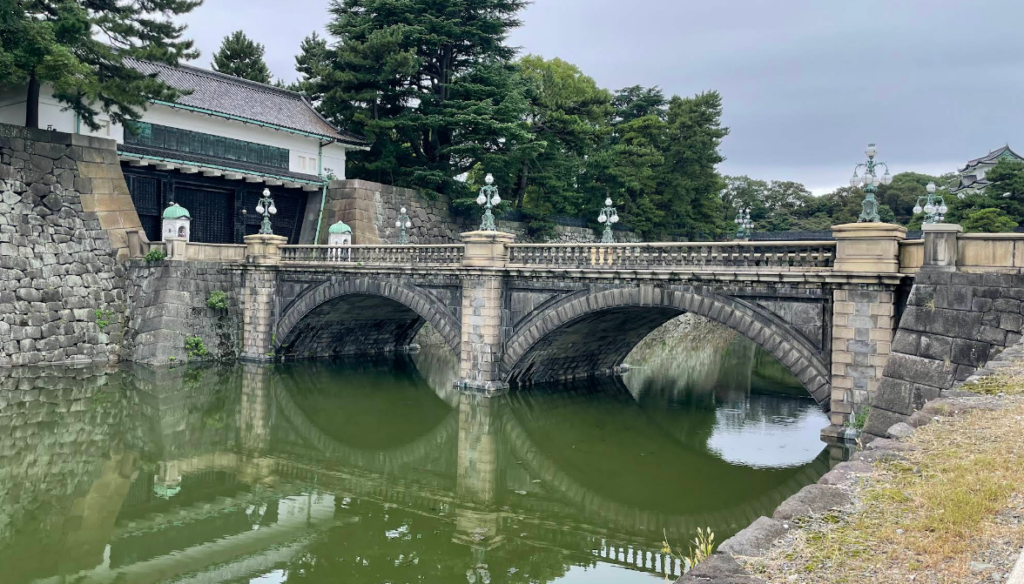
The Iconic Symbol of the Imperial Palace
This is the most famous landmark for travelers. The beautiful stone arched bridge, known as Seimon Ishibashi, is the main gateway used for formal imperial ceremonies.
- The Highlight: When viewed from a specific angle, this stone bridge aligns with the iron bridge behind it, leading locals to call it “Nijubashi” (Double Bridge). In the background, you can see the Fushimi-yagura, an original guard tower from the Edo period.
- The Hack: While you cannot cross the bridge on a normal day, you can get very close to the gate for photos. It is only opened to the public during the New Year’s Greeting (Jan 2nd) and the Emperor’s Birthday.
3. Sakurada-mon Gate
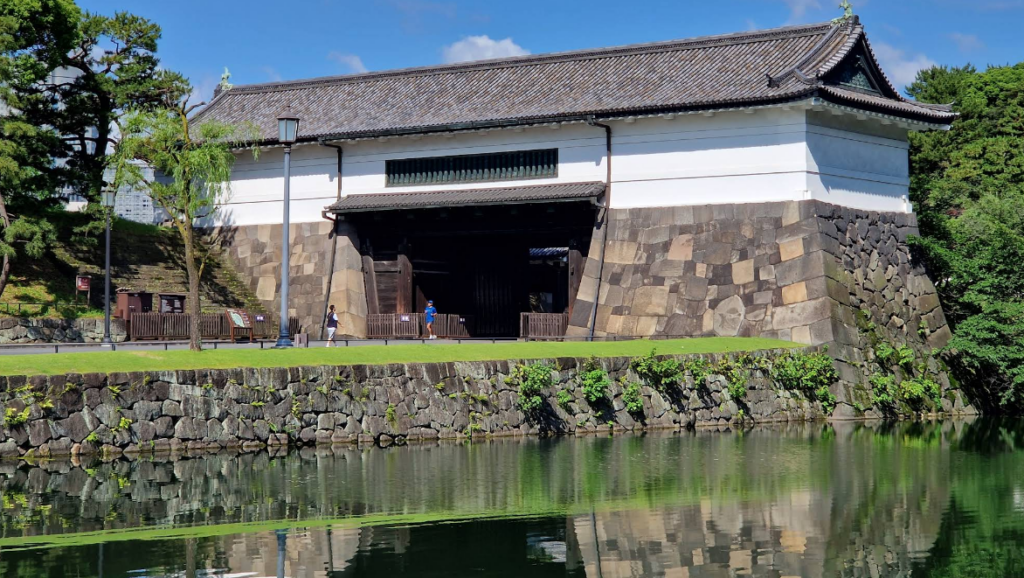
A Massive Fortress Gate Frozen in Time
For history buffs, Sakurada-mon is a must-see. Designated as an Important Cultural Property, this massive wooden and stone gate was rebuilt in 1636 and served as a vital defense point for Edo Castle.
- The Highlight: Notice the “Masugata” structure—a double-gate system designed to trap enemies in a square courtyard where guards could attack from above. It is a masterpiece of Samurai defensive engineering.
- History Tip: This gate was the site of the famous “Sakuradamongai Incident” in 1860, a political assassination that changed the course of Japanese history.
4. Statue of Kusunoki Masashige
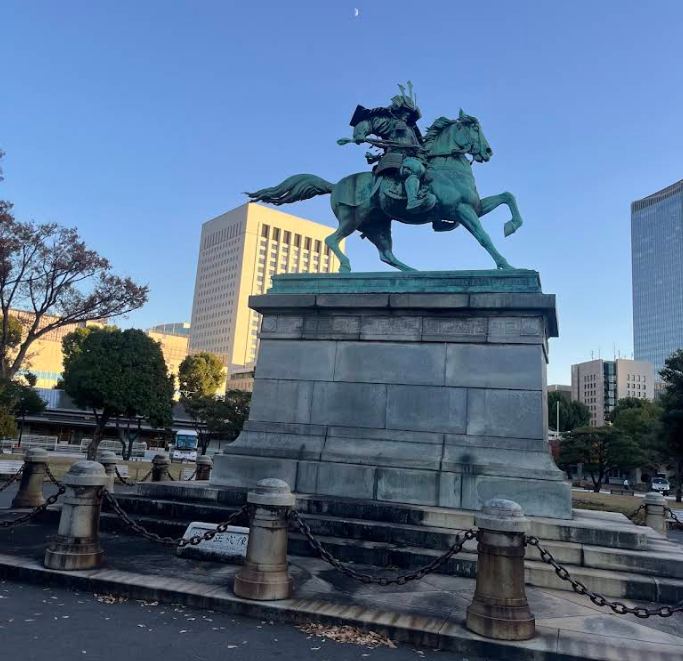
The Dynamic Warrior on Horseback
In one corner of the garden stands the grand bronze statue of Kusunoki Masashige, a legendary 14th-century Samurai warrior known for his absolute loyalty to the Emperor.
- The Highlight: This is considered one of the “Three Great Bronze Statues of Tokyo.” The craftsmanship is world-class—you can see the incredible detail in the horse’s muscles and the warrior’s fierce expression.
- The Hack: The area around the statue is filled with benches and shade, making it a perfect spot to take a break and soak in the garden’s atmosphere.
5. Nanko Rest House Shop
Rare & Exclusive Imperial Gifts
End your walk at the Nanko Rest House, located near the warrior statue. This is the only place where you can find officially licensed souvenirs exclusive to the Imperial Palace Outer Garden.
- The Rare Item: Look for “Kokyo-mitsu Yurinoki”—a rare honey harvested from the blossoms of tulip trees found inside the Imperial Palace grounds. It has a delicate, floral flavor found nowhere else.
- The Sweet Hack: They also sell “Imperial Garden Kintsaba” (sweet bean cakes) and other elegant Japanese treats that make for sophisticated gifts.
Traveler’s Hack: The “Golden Route”
- Access: The garden is a short walk from Nijubashi-mae Station or Otemachi Station. However, it is also a pleasant 15-minute walk from the Marunouchi Exit of Tokyo Station.
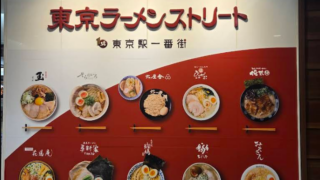
- The Perfect Day: Spend your morning exploring the history and silence of the Imperial Palace Outer Garden. Once you’ve worked up an appetite, head back to Tokyo Station for a world-class bowl of ramen at “Tokyo Ramen Street.” This is the ultimate “History & Food” golden route for any traveler.