Nihonbashi: The Ultimate Guide to Tokyo’s Historic and Modern Heart
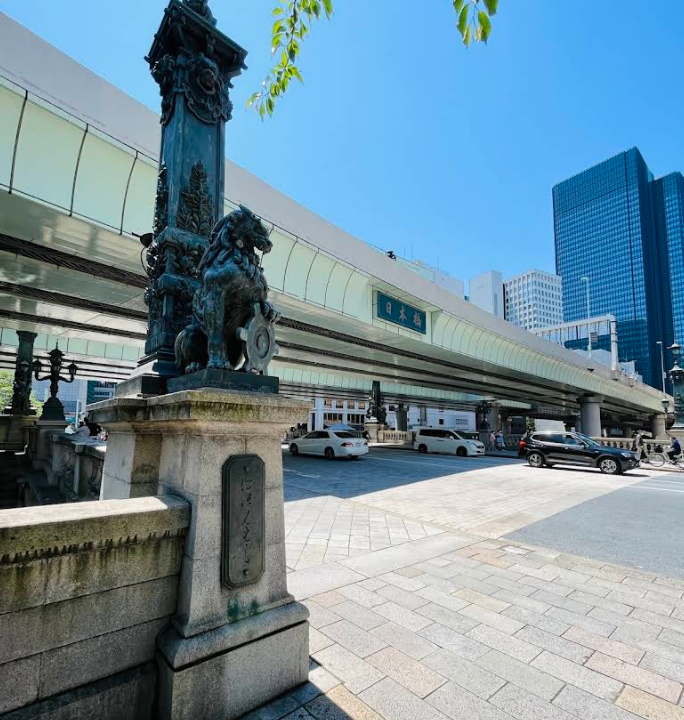
Nihonbashi: The Ultimate Guide to Tokyo’s Historic and Modern Heart
Just a 10-minute walk from Tokyo Station lies Nihonbashi, the center of Japan’s economy and culture since the Edo period. Here, majestic historical monuments stand at the feet of sleek skyscrapers, creating a district where the old and new worlds collide. Explore the “Sophisticated Tokyo” with these five essential spots.
1. Nihonbashi Bridge: The Starting Point of All Roads
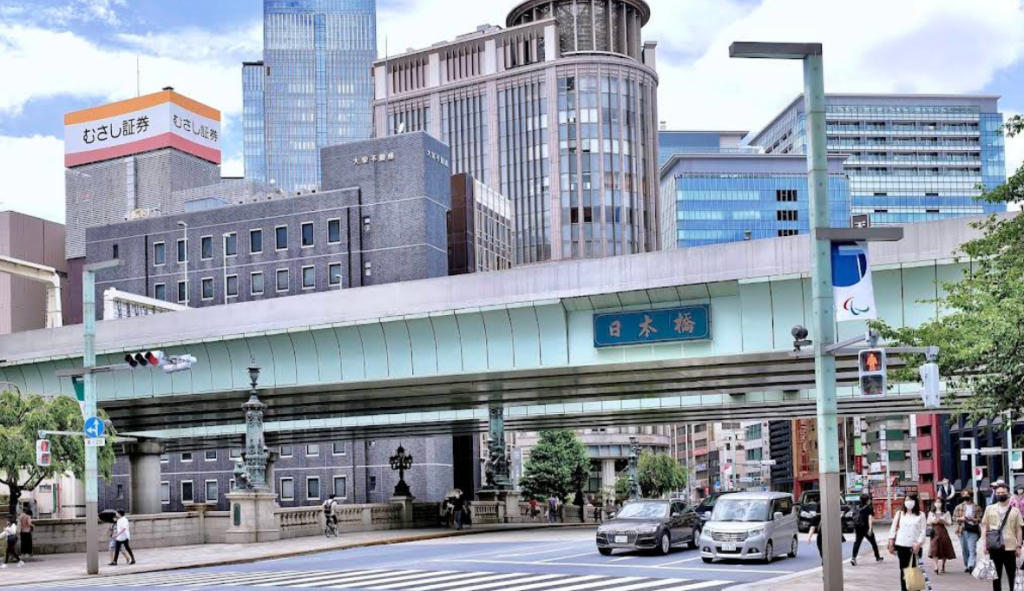
Where Every Japanese Journey Begins
Born in 1603, this legendary bridge is the very reason for the district’s name. During the Edo period, the Shogunate designated this spot as the “Kilometer Zero”—the starting point for the five major highways connecting all of Japan.
- Architectural Beauty: The current double-arched stone bridge was completed in 1911 and is a designated Important Cultural Property.
- The Photo Op: Look for the winged statues of Kirin (mythical creatures) on the bridge railings. They feature wings to symbolize Japan “taking flight” to the world from this very spot. It’s a famous filming location for Japanese movies and dramas.
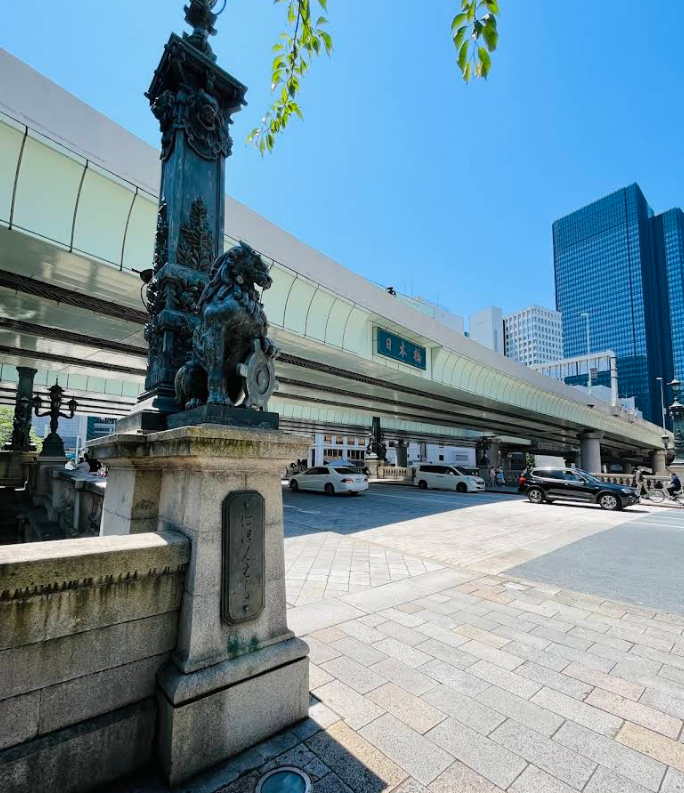
GoogleMAP:Nihonbashi Bridge
2. Nihonbashi Mitsukoshi: The Pioneer of Luxury Shopping
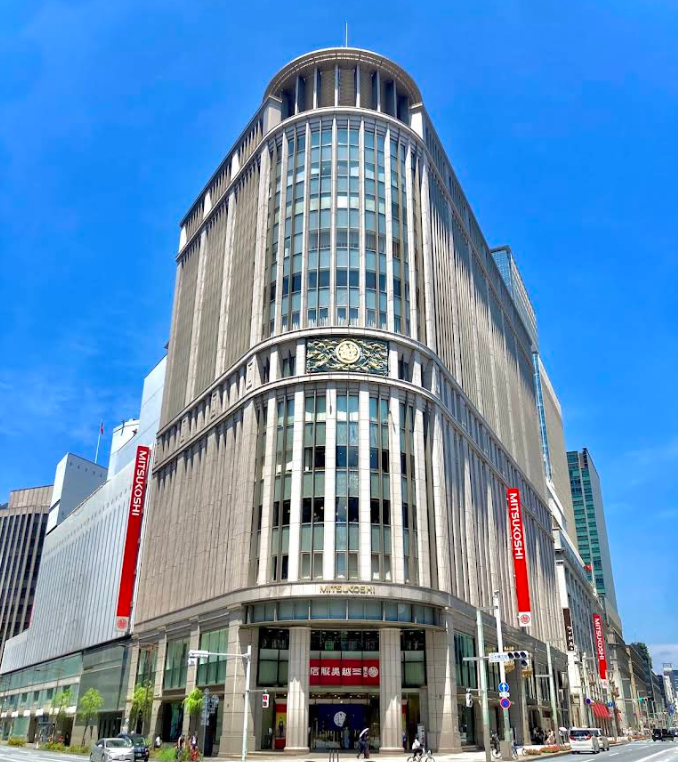
Japan’s First and Most Historic Department Store
Founded in 1673 as a kimono shop called “Echigoya,” Mitsukoshi is the store that defined modern Japanese retail.
- Imperial Architecture: Completed in 1914, this Renaissance-style building is an Important Cultural Property. Its grand atrium and luxurious interior are breathtaking.
- The Icon: At the main entrance, you’ll find the famous Bronze Lion statues, modeled after the lions in London’s Trafalgar Square. They have guarded the entrance for over 100 years.
- What to Expect: From traditional Japanese crafts to the latest global fashion, this is the destination for high-quality gifts.
GoogleMAP:Nihonbashi Mitsukoshi
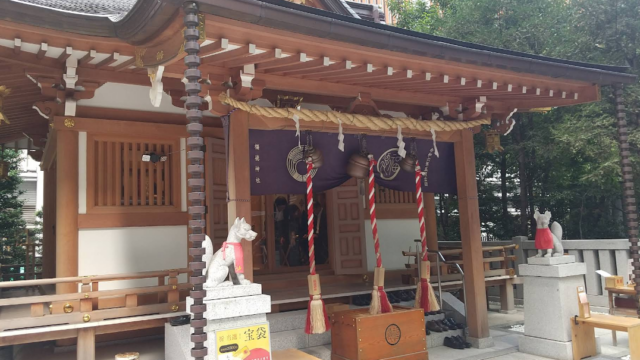
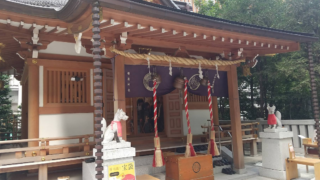
3. Fukutoku Shrine: A Serene Escape Among Skyscrapers
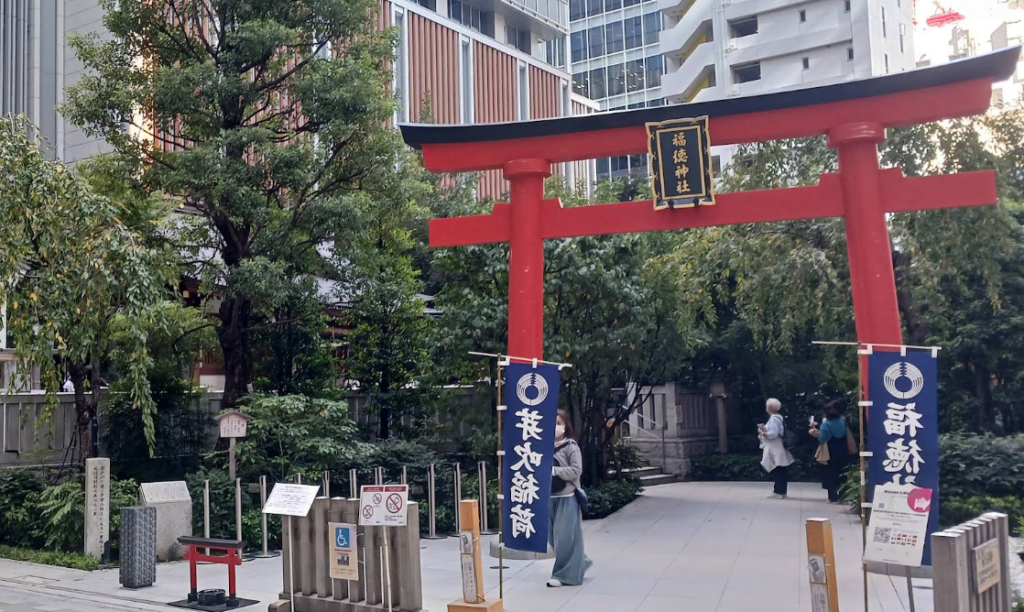
A Mystical Oasis for Good Fortune
Surrounded by modern glass office buildings, this shrine appears like a vision from another century. It has a history of over 1,000 years and was once a favorite of the Tokugawa Shoguns.
- Modern Zen: The current shrine was rebuilt in 2014, featuring a sleek, refined design that perfectly contrasts with the surrounding modern architecture.
- The Power Spot: Historically famous for bringing luck to lottery players, it is a popular spot to pray for good fortune.
- Night View: The shrine is illuminated after dark, creating a dramatic and highly photogenic atmosphere.
GoogleMAP:Fukutoku Shrine
4. COREDO Muromachi Terrace: The Cultural Hub
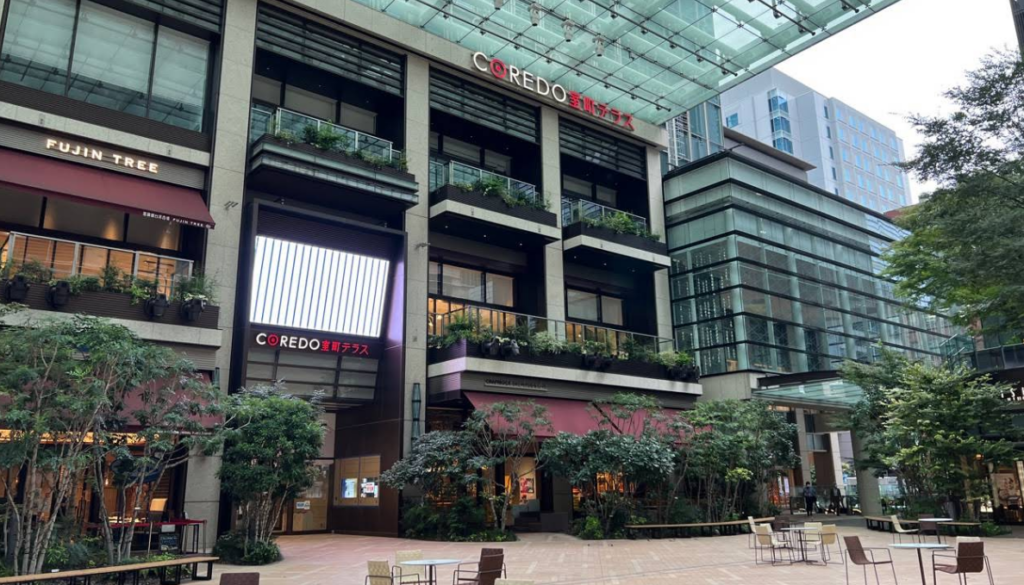
A New Breeze of Lifestyle and Design
Opened in 2019, this complex is the trendiest lifestyle destination in the district, aimed at introducing a “new breeze” to the historic Nihonbashi.
- Global Vibes: On the 2nd floor, you’ll find eslite spectrum nihonbashi, a world-famous bookstore from Taiwan making its Japanese debut. You can explore curated books, high-quality Japanese crafts, and even participate in workshops.
- Gourmet Diversity: From underground bistros to elegant dessert shops, the complex hosts about 40 restaurants serving everything from artisanal Italian to authentic Japanese cuisine.
GoogleMAP:COREDO Muromachi Terrace
5. Nihonbashi Takashimaya S.C. (Main Building)
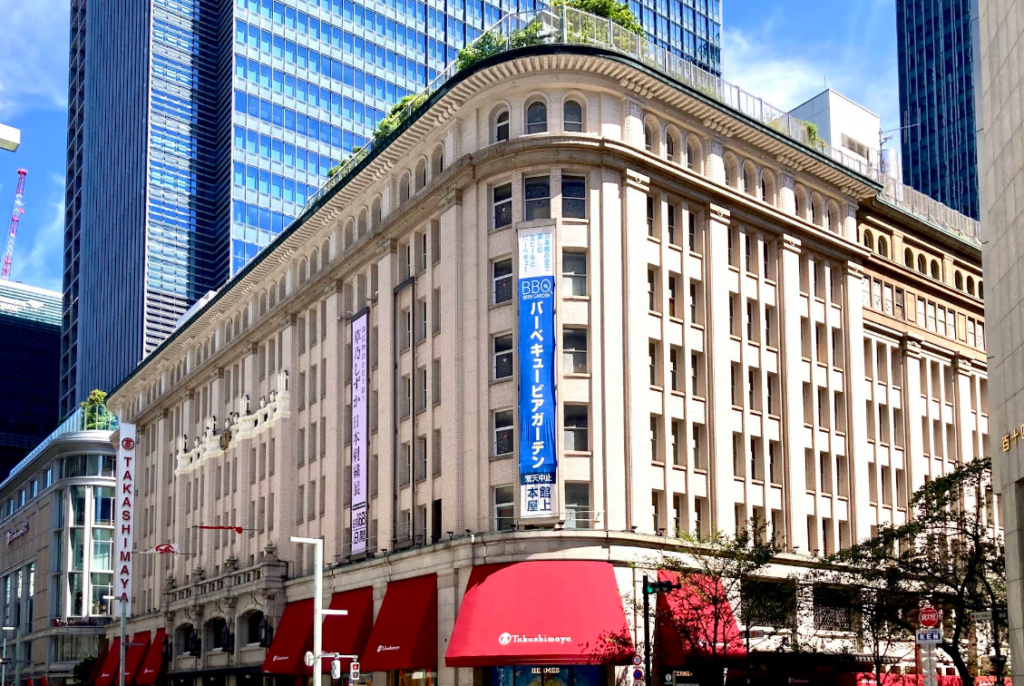
A Journey into Retro Elegance
This is more than a store; it’s a living museum of Japanese hospitality. Completed in 1933, it was the first department store building in Japan to be designated an Important Cultural Property.
- East Meets West: The architecture is a grand blend of Western and traditional Japanese design, known as “Teikan” style.
- The Experience: Step into a bygone era with their vintage manual elevators, still operated by uniformed elevator attendants. It is one of the few places in Tokyo where you can experience this nostalgic, high-end service.
- Rooftop Zen: Relax at the “Nihonbashi Garden” on the roof—a hidden green oasis where you can escape the city noise.
GoogleMAP:Nihonbashi Takashimaya S.C.
TOKYOTRAVELHACKS: Insider Tips for Nihonbashi
- Gourmet History: Don’t miss the legendary “Taimeiken” (est. 1931), famous for its “Tampopo Omurice” (omelet rice). It’s a true taste of Japanese-Western fusion history.
- The Perfect Day Route: Nihonbashi is a 15-minute walk from Tokyo Station. You can easily combine this walk with a visit to the Imperial Palace Outer Garden or Tokyo Ramen Street for the perfect “Golden Day” in Tokyo.
- Unique Souvenirs: Check out “Haibara” (est. 1806) for exquisite traditional Washi paper, or visit “L’abeille” for a wide selection of premium honey from around the world.
の無料の写真素材-ID.26930|フリー素材-ぱくたそ-640x360.jpg)