A Deep Dive into Tokyo Station & Marunouchi Architecture
A Deep Dive into Tokyo Station & Marunouchi Architecture
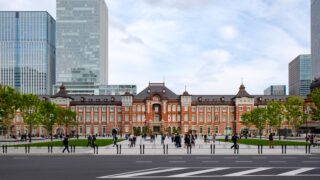
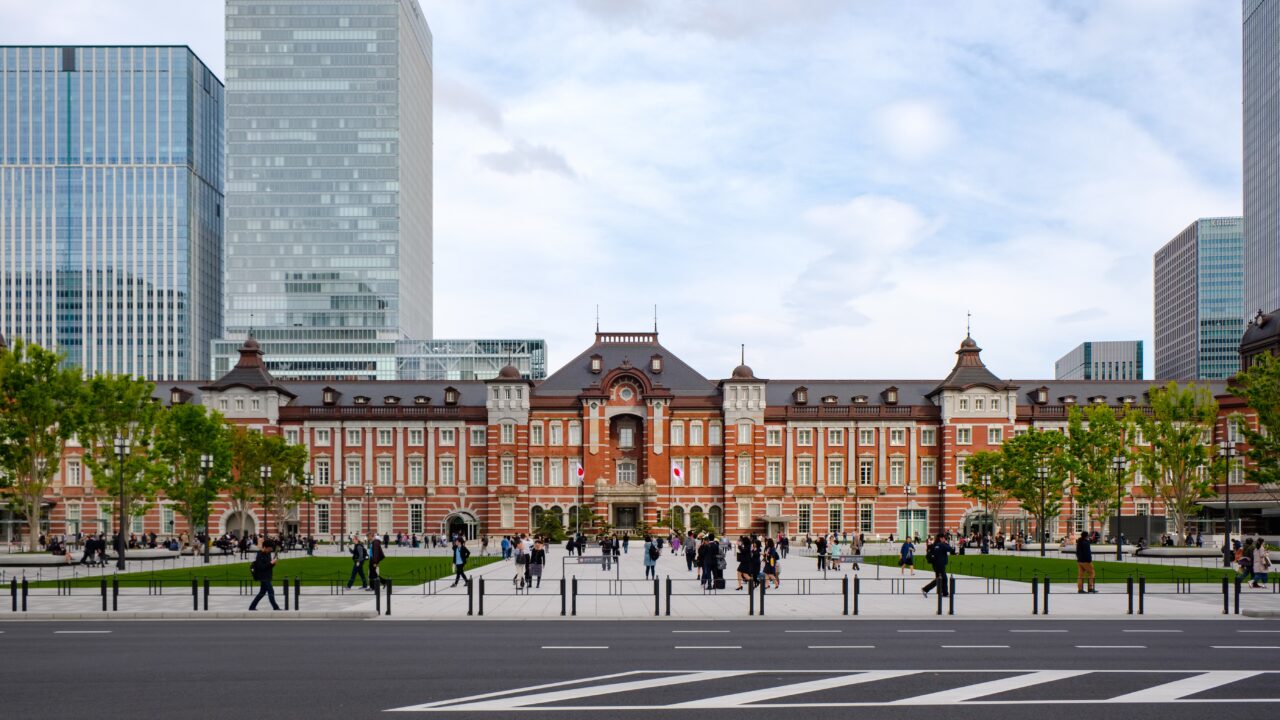
Tokyo is a city where history and modernity intersect in the most breathtaking ways. At its heart lies the Tokyo Station and Marunouchi area, a district that exudes the dignity of Japan’s true gateway. Centered around the iconic red-brick station building—restored in 2012 to its original 1914 grandeur—this area is a treasure trove of historical architecture and urban design. Walking through Marunouchi feels like time-traveling through Japan’s eras.
1. The Majestic Design of the Red-Brick Station
The Tokyo Station Marunouchi Building was born in 1914, designed by Kingo Tatsuno, often hailed as the “Father of Modern Japanese Architecture.” While much of the interior and the roof were lost to the air raids of WWII, a massive preservation and restoration project was completed in 2012. Today, it stands again in its original three-story form, recognized as a National Important Cultural Property.
The Domes: A Masterpiece Overhead
The most striking features are the octagonal domes at the North and South ends of the station. Looking up from the ground floor, you are greeted by a ceiling over 30 meters high, adorned with intricate reliefs.
- The Zodiacs: Look closely at the corners to find eight of the twelve Chinese zodiac signs.
- Samurai Symbolism: You can find “Keystone” ornaments modeled after the helmet of the famous samurai warlord Toyotomi Hideyoshi, alongside reliefs of swords and eagles. The level of detail achieved by early 20th-century craftsmen is truly overwhelming.
The Brickwork and Authentic Slate
The exterior is a mosaic of history. Approximately 8.33 million structural bricks were used in its construction.
- Texture of Time: On the facade, you can observe the subtle difference in texture between the original bricks on the second floor and the restored bricks on the third.
- The Roof: The roof is covered with 430,000 pieces of Ogatsu slate (natural slate from Miyagi Prefecture), 80,000 of which are original pieces salvaged from before the war, preserving the authentic weight of the past.
2. Living History: The Hotel and Gallery Inside the Station
Tokyo Station is more than a transit hub; it houses spaces where history is still “living” and accessible to the public.
The Tokyo Station Hotel
Established in 1915, this prestigious classic hotel is built directly into the station building. It is famous for hosting legendary Japanese authors, such as Seicho Matsumoto, who reportedly found the inspiration for his mystery novel Points and Lines while watching the trains from his room. The “Atrium,” a guest lounge located under the station’s roof with a 9-meter-high ceiling, is a breathtaking space that reveals the massive timber and brick structure of the station’s roof.
Tokyo Station Gallery
Located in the North Wing, this museum is a must-visit for architecture fans. The gallery walls are made of the original structural bricks from a century ago, allowing you to touch the history of the building while viewing art. The corridors connecting the exhibition rooms offer unique vantage points over the station’s bustling concourse, allowing you to see the mosaic floors and dome details from a higher perspective.
3. Art and History Beyond the Station Gates
The name “Marunouchi” literally means “Inside the Circle,” referring to its historical location within the moats of Edo Castle (the current Imperial Palace).
Mitsubishi Ichigokan Museum
A short walk from the station brings you to this red-brick western-style building, originally designed in 1894 by Josiah Conder. As the first Western-style office building in Marunouchi, it has been meticulously reconstructed. Even if you don’t enter the exhibition, the inner courtyard and the grand Victorian-era architecture provide a stunning contrast to the surrounding glass skyscrapers.
Intermediatheque (JP Tower KITTE)
Housed in the partially preserved Old Tokyo Central Post Office, this is a free museum operated by the University of Tokyo. It displays a vast collection of scientific specimens—from dinosaur skeletons to vintage laboratory equipment—in a space that evokes the atmosphere of a “cabinet of curiosities” from the Showa Modern era. It is one of the city’s best-kept secrets for those who love history and science.
4. The Magic of the Night Illumination
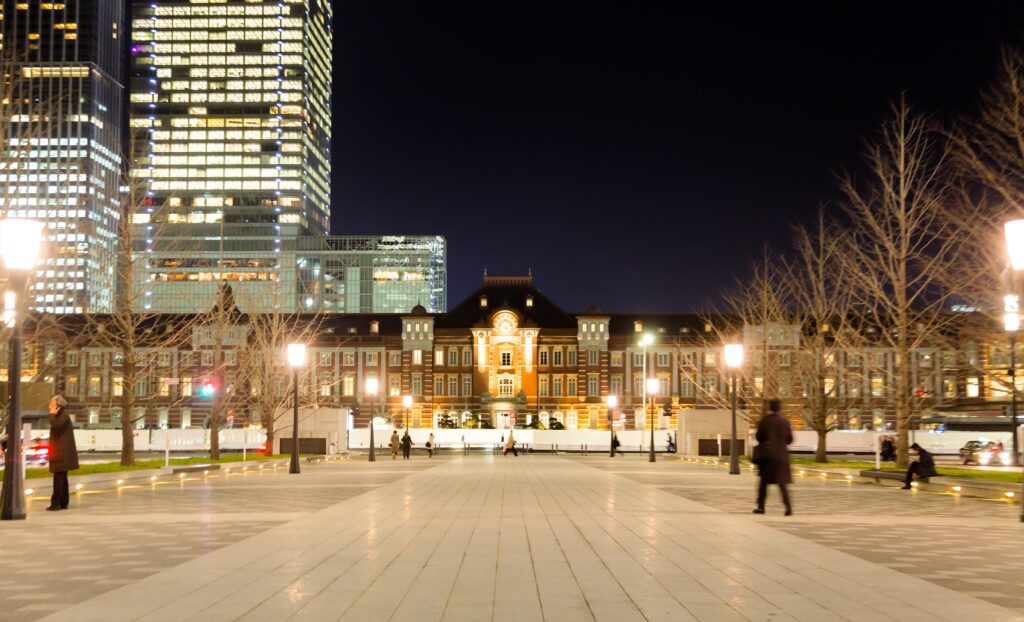
As the sun sets, Tokyo Station undergoes a dramatic transformation. The daily light-up emphasizes the warm orange glow of the bricks and the architectural details of the domes.
- The Station Square: Standing in the vast open plaza between the station and the Imperial Palace, you can see the symmetrical beauty of the building perfectly lit against the dark sky.
- The Rainy Day Bonus: On rainy nights, the station reflects on the wet pavement of the station square, creating a shimmering, mystical scene that is a favorite for photographers.
- Best Viewing Spot: Head to the rooftop garden on the 6th floor of KITTE. From here, you can watch trains streak across the sky like beams of light against the backdrop of the illuminated red brick dome. It’s a breathtaking sight to conclude your Tokyo journey.
Essential Information & Access
- Nearest Station: JR Tokyo Station (Marunouchi North, Central, or South Exits); Tokyo Metro Marunouchi Line.
- History Note: The station is a designated National Important Cultural Property.
- Pro Tip: The illumination typically lasts from sunset until 9:00 PM.