Explore the Soul of Old Tokyo: 5 Must-Visit Temples and Shrines in Taito City (Beyond Senso-ji)
Explore the Soul of Old Tokyo: 5 Must-Visit Temples and Shrines in Taito City (Beyond Senso-ji)
While Senso-ji is undoubtedly the superstar of Tokyo’s spiritual landmarks, Taito City—home to the historic Asakusa and Ueno districts—is dotted with other hidden gems that offer a deeper, quieter, and more diverse look into Japanese spirituality.
From the golden shrines of the Shoguns to the legendary birthplace of the “Beckoning Cat,” here are five remarkable spots that will make your Tokyo journey truly authentic.
1. Ueno Toshogu Shrine: The Golden Legacy of the Shoguns
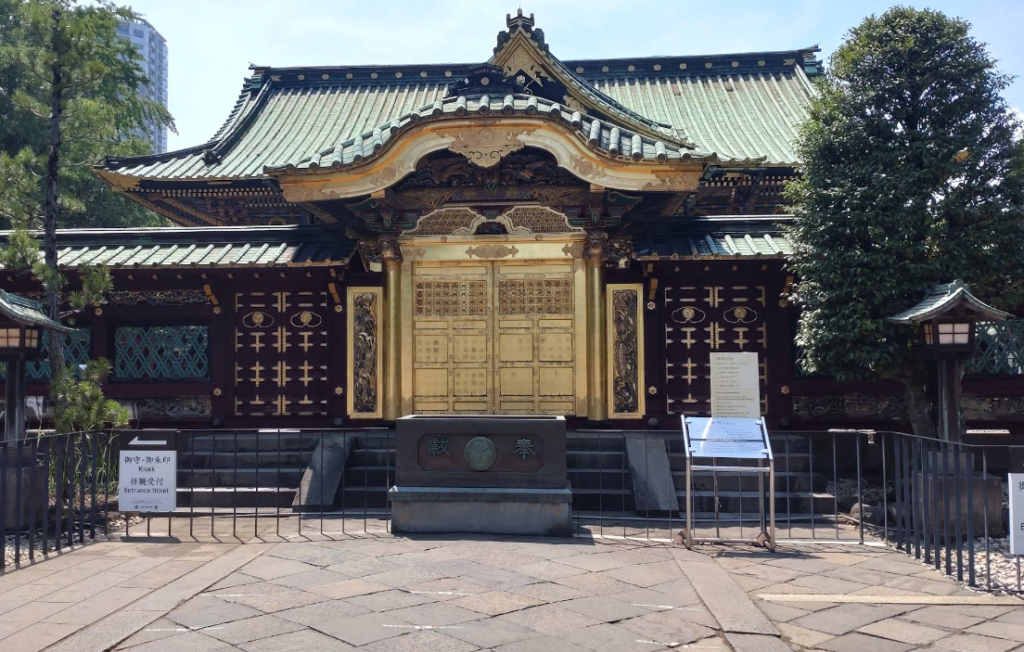
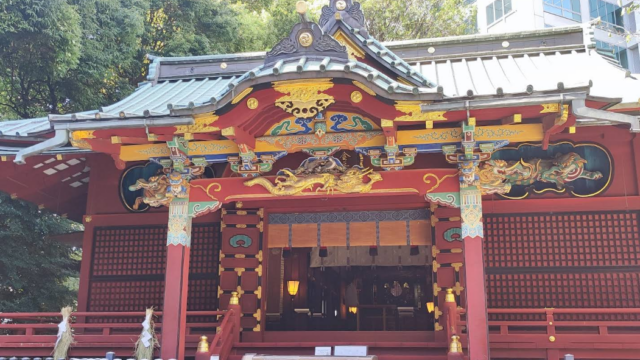
Located within the sprawling greenery of Ueno Park, Ueno Toshogu is a breathtaking masterpiece of Edo-period architecture. Established in 1627, it is dedicated to Tokugawa Ieyasu, the founder of the Tokugawa Shogunate.
- Why it’s a must-visit: Unlike many structures in Tokyo that were rebuilt after WWII, Ueno Toshogu is an original survivor. The main hall is covered in genuine gold leaf, earning it the nickname “The Golden Shrine.”
- For the History Buffs: Look closely at the “Noborigoi” (Climbing Carp) carvings on the gates. Legend has it they are so lifelike that they escape to swim in the nearby Shinobazu Pond at night.
- The Experience: Walk through the path lined with over 200 massive stone lanterns (Ishidoro) donated by feudal lords centuries ago. In winter and spring, the shrine also hosts a famous Peony Garden, a treat for nature lovers.
GoogleMAP:Ueno Toshogu Shrine
2. Imado Shrine: The Birthplace of the Lucky “Beckoning Cat”
A short, pleasant walk along the Sumida River from central Asakusa brings you to Imado Shrine. This colorful and charming shrine is a favorite for locals seeking luck in love (En-musubi).
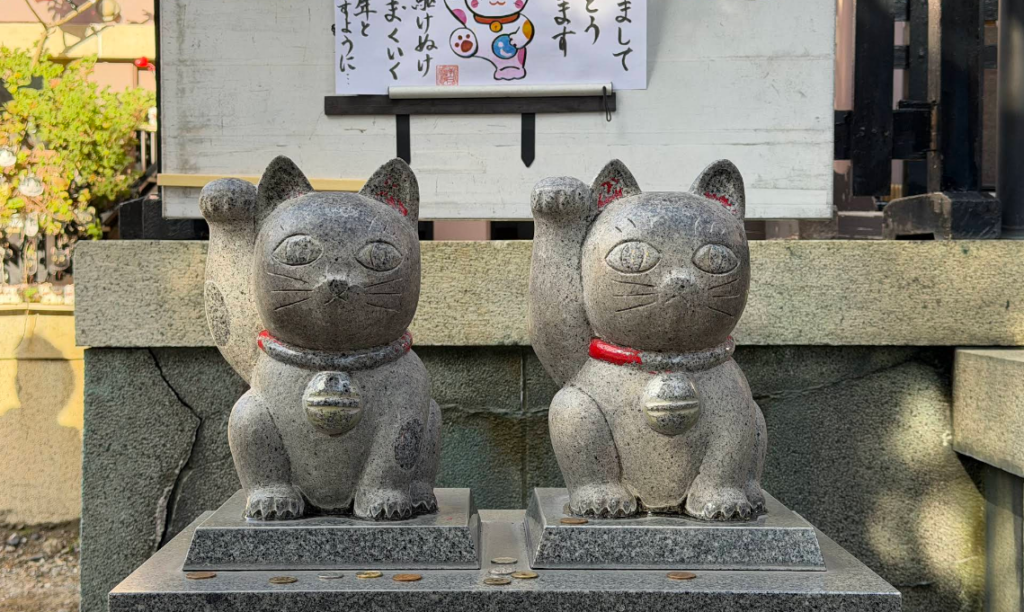
- Why it’s a must-visit: It is widely considered the birthplace of the Maneki-neko (Beckoning Cat). Everywhere you look, you’ll find pairs of cute cat statues with their paws raised to welcome visitors.
- Cultural Insight: While most Maneki-neko are seen alone, the cats here are usually in pairs—a male and a female—symbolizing a wish for a good marriage or partnership.
- The Experience: Purchase a round Ema (wooden prayer plaque). Most Ema in Japan are pentagonal, but Imado’s are circular to represent “En” (the circle/fate), symbolizing a smooth, never-ending bond. It’s arguably the most “Instagrammable” shrine in Tokyo.
GoogleMAP:Imado Shrine
3. Kiyomizu Kannon-do Temple: A Mini-Kyoto in Ueno
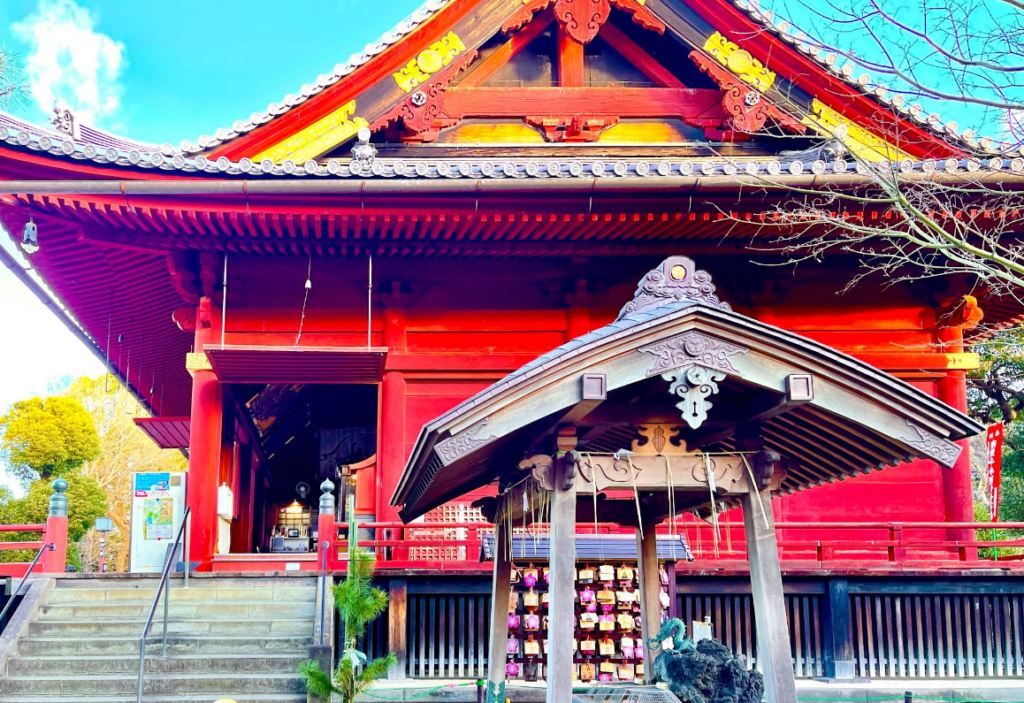
Ever seen a photo of a pine tree shaped like a perfect circle? That’s the “Moon Pine” (Tsuki no Matsu) at Kiyomizu Kannon-do, located on a hill in Ueno Park.
- Why it’s a must-visit: Built in 1631, this temple was modeled after the world-famous Kiyomizu-dera in Kyoto. It features a prominent wooden balcony (the “Butai”) that juts out over the hillside.
- The “Moon Pine”: This architectural wonder of nature was famously depicted in Ukiyo-e woodblock prints by Utagawa Hiroshige. It was lost for 150 years before being painstakingly restored using traditional gardening techniques in 2012.
- The Experience: Look through the circular Moon Pine to see the Bentendo Temple in the distance. It’s a classic “frame within a frame” photo opportunity that connects the mountain to the water.
GoogleMAP:Kiyomizu Kannon-do Temple
4. Asakusa Shrine: Where Shinto Meets Buddhism
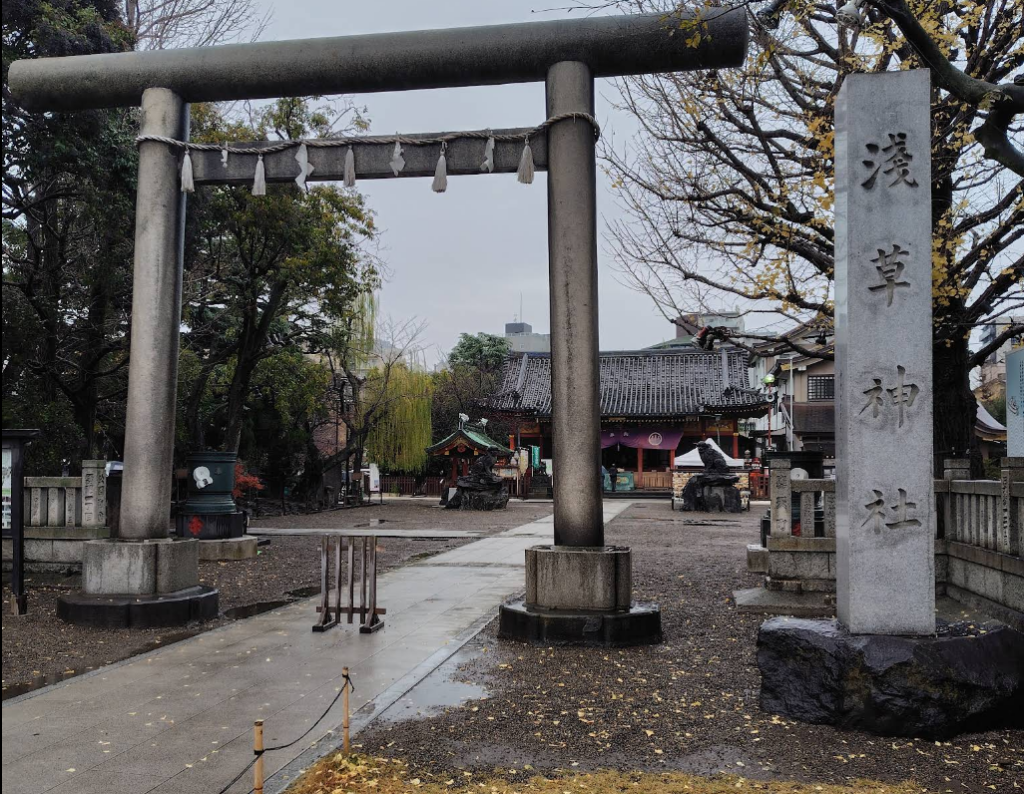
Often overlooked because it sits right next to the massive Senso-ji temple, Asakusa Shrine (also known as Sanja-sama) offers a fascinating look at how Shinto and Buddhism coexist in Japan.
- Why it’s a must-visit: While Senso-ji honors the Goddess of Mercy (Kannon), Asakusa Shrine honors the three ordinary men who discovered the Kannon statue in the river, founding the temple.
- The Sanja Matsuri: This shrine is the heart of the Sanja Matsuri, Tokyo’s wildest and largest festival held every May. If you visit during this time, you’ll see thousands of people carrying heavy portable shrines (Mikoshi) through the streets.
- The Experience: Contrast the atmosphere here with Senso-ji. While the temple is grand and bustling, the shrine is intimate and ornate, featuring beautiful carvings of mythical creatures like the Kirin and Phoenix on its facade.
GoogleMAP:Asakusa Shrine
5. Kaneiji Temple: The Guardian of the North
-Google-マップ-1024x694.png)
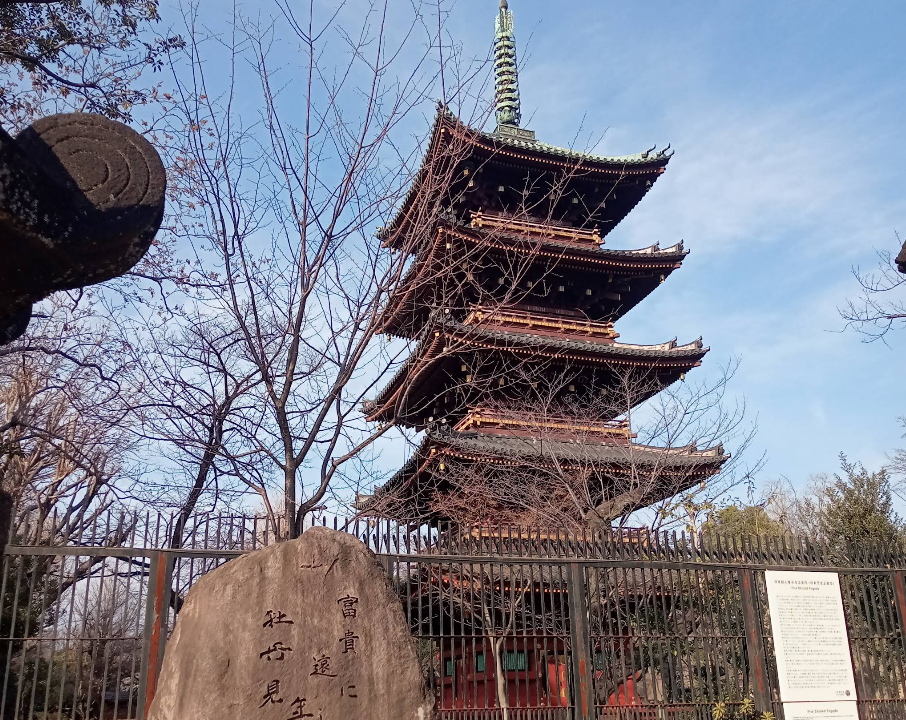
In its prime, Kaneiji was one of the largest and most powerful temples in Japan, occupying the entire area that is now Ueno Park. It served as the guardian of the Shogunate against evil spirits believed to come from the north.
- Why it’s a must-visit: It holds the tombs of six Tokugawa Shoguns. While the original grand complex was largely destroyed during the Boshin War (1868), the remaining “Konpon Chudo” hall is a place of profound peace and gravity.
- A Hidden Gem: This is not a “tourist trap.” You will see very few crowds here, making it the perfect place for meditation or a quiet walk under the giant ginkgo trees.
- The Experience: Visit the nearby five-story pagoda (originally part of Kaneiji, now inside the Ueno Zoo grounds) to appreciate the sheer scale of what this temple once was.
GoogleMAP:Kaneiji Temple
Pro-Tips for Your Temple & Shrine Tour
- Etiquette: At shrines (Torii gate), bow once before entering. At temples (Sanmon gate), you don’t necessarily need to bow, but it’s polite. Wash your hands at the Chozuya water pavilion before praying.
- Goshuin (Temple Stamps): If you are visiting multiple spots, buy a Goshuin-cho (stamp book). For a small fee (usually 300–500 yen), a monk or priest will hand-write beautiful calligraphy and stamp your book. It’s the ultimate spiritual souvenir.
- Timing: Most of these locations open at sunrise but close their main gates or stamp offices by 4:00 PM or 5:00 PM. Start your day early!