Shinjuku Gyoen: An Urban Oasis of Serenity and Seasonal Beauty

Shinjuku Gyoen: An Urban Oasis of Serenity and Seasonal Beauty
In a city defined by neon lights, towering skyscrapers, and organized chaos, Shinjuku Gyoen National Garden offers something truly precious: breathing room. Located just a short stroll from Shinjuku Station—the world’s busiest railway hub—this 58-hectare park is a masterful blend of three distinct garden styles and a sanctuary for those seeking peace amidst the urban rush.
Originally an imperial estate, Shinjuku Gyoen has transformed into a public treasure where history, nature, and modern leisure coexist. Here is your guide to exploring this emerald heart of Tokyo.
1. A World of Three Gardens
The true magic of Shinjuku Gyoen lies in its diversity. As you walk through the park, you seamlessly transition between three distinct landscape traditions:
- The Japanese Traditional Garden: This area is the soul of the park. It features large ponds with scenic bridges, meticulously manicured pine trees, and stone lanterns. It is the perfect place to experience “Zen” and witness the classic beauty of Japanese landscaping.
- The English Landscape Garden: Characterized by vast, open lawns and towering cherry trees, this area feels like a grand European park. It is the most popular spot for families and friends to spread out a picnic blanket and enjoy the sunshine.
- The French Formal Garden: Symmetrical and elegant, this section features a beautiful rose garden with over 500 rosebushes and romantic sycamore-lined avenues. It offers a sophisticated atmosphere that changes beautifully with each season.
2. Seasonal Highlights: More Than Just Cherry Blossoms
While Shinjuku Gyoen is world-famous as one of Tokyo’s premier Sakura (cherry blossom) viewing spots, its beauty is not limited to spring.
- Spring (Late March – April): With over 1,000 cherry trees of 65 different varieties, the park becomes a sea of pink and white. Because there are early and late-blooming trees, the season here lasts longer than in many other spots in the city.
- Autumn (November): The park transforms into a fiery canvas of red, orange, and gold. The maple and gingko trees provide some of the best autumn foliage views in central Tokyo.
- Winter & Summer: Even in the off-seasons, the park offers unique charms. The Greenhouse, a modern glass structure, houses over 2,700 species of tropical and subtropical plants, making it a perfect escape on a cold winter day or during a rainy afternoon.
3. Architectural Gems and Modern Cafes
Shinjuku Gyoen is also home to historical structures that tell the story of Japan’s modernization.
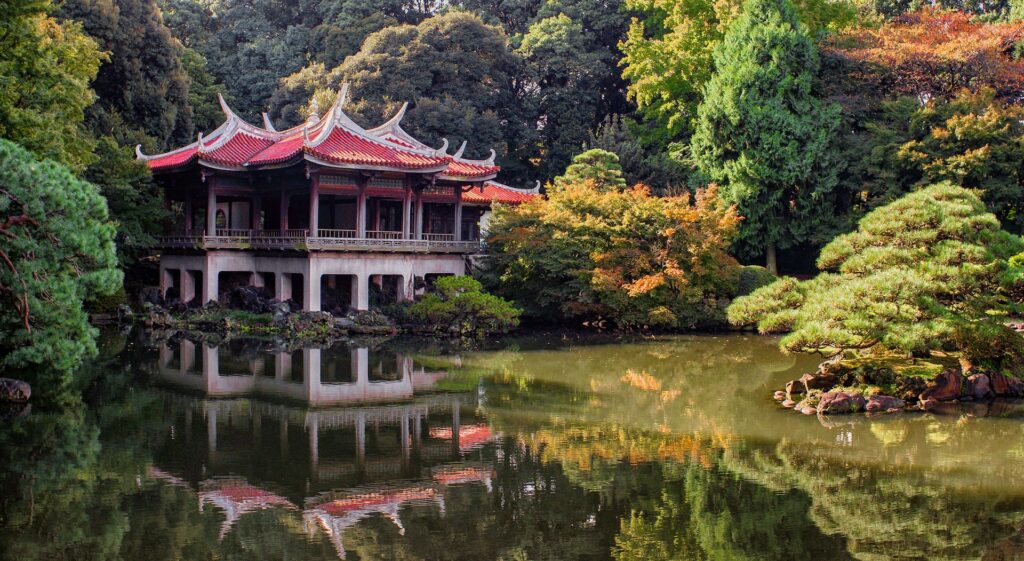
The Taiwan Pavilion (Kyu-Goryotei)
Built in 1927 to commemorate the wedding of Emperor Hirohito, this elegant Chinese-style structure sits on the edge of a pond. It offers a stunning vantage point where you can see the traditional roof framed against the futuristic NTT Docomo Yoyogi Building in the distance—a classic “Old vs. New” Tokyo photo opportunity.
Starbucks Coffee Shinjuku Gyoen
In recent years, the park has become home to one of the most beautiful Starbucks locations in Japan. Designed with sustainable wood to blend perfectly with the surrounding forest, the cafe features massive glass windows. Sitting here with a latte while gazing at the pond and trees is a “luxury of time” that every traveler should experience.
4. Exploring Shinjuku Sanchome: The Perfect Post-Park Spot
After you’ve recharged your batteries in the garden, exit through the Shinjuku Gate to explore the vibrant Shinjuku Sanchome area.
- Isetan Shinjuku: One of Japan’s most prestigious department stores. Even if you aren’t shopping for luxury goods, the “Depachika” (basement food hall) is an incredible culinary museum where you can find world-class pastries, bento boxes, and traditional Japanese sweets.
- Shinjuku Golden Gai: A short walk away, this area consists of tiny alleys packed with over 200 miniature bars. It’s the perfect place to experience Tokyo’s nostalgic, gritty nightlife after a day of peaceful nature.
- Hanazono Shrine: A hidden gem nestled among the skyscrapers, this Shinto shrine is a peaceful spot to pay your respects and see a different side of Shinjuku’s spiritual life.
Traveler’s Tips & Essential Info
- Access: The park has three main gates. The Shinjuku Gate is a 10-minute walk from JR Shinjuku Station (South Exit), and the Sendagaya Gate is close to JR Sendagaya Station.
- Entry Fee: 500 JPY for adults. (Note: The park is closed on Mondays, except during cherry blossom and chrysanthemum seasons).
- Alcohol Policy: Unlike many other parks in Japan, alcohol is strictly prohibited in Shinjuku Gyoen. This policy helps maintain its serene, family-friendly atmosphere.
- Pro Tip: Download the “Shinjuku Gyoen App” to see what flowers are currently in bloom and to find historical information as you walk.
Shinjuku Gyoen is a testament to Tokyo’s ability to preserve its soul amidst rapid development. It is a place to slow down, breathe deeply, and appreciate the delicate transitions of the seasons. No matter how busy your Tokyo itinerary is, make sure to save a few hours for this extraordinary urban oasis.